If you use IP cameras from different brands, a simple live view can turn into a tour of vendor apps and complicated surveillance software. For a home, workshop or small office, you often do not need a full NVR just to check a camera from a Windows PC.
This guide shows how to use Rekami, formerly ReCam Viewer, to find a compatible camera on your local network, test its RTSP stream and save it for later.
What you need
- A Windows PC connected to the same local network as the camera.
- A powered-on camera with RTSP or ONVIF enabled.
- The camera username and password, if authentication is required.
- Rekami installed from Microsoft Store.
If you already know the camera’s RTSP URL, you can enter it directly. Otherwise, start with discovery.
1. Open the camera wizard
In Rekami, open the camera area and choose to add a camera. The wizard offers two paths: search the local network or enter a stream URL manually.
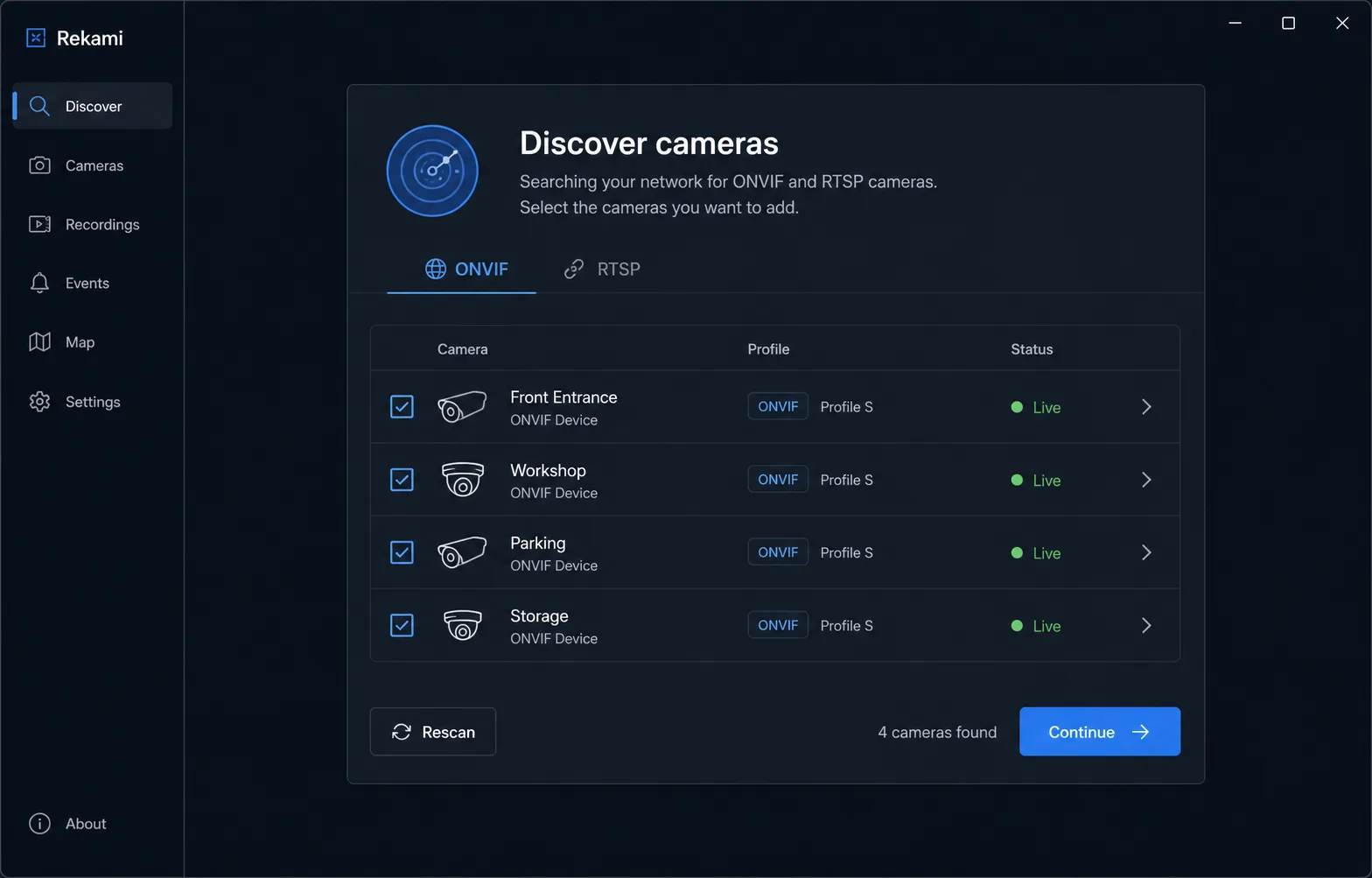
Choose discovery when you do not know the device address or RTSP path. Choose manual setup when the camera documentation already provides a URL.
2. How to find ONVIF cameras on your network
Rekami checks for compatible devices and presents the candidates it can identify. ONVIF information can help identify a device and its available profiles; playback still uses an RTSP stream.
Select the candidate that matches your camera. If several devices appear, verify the model or address in the camera’s own administration page before continuing.
3. Enter credentials and test the stream
Enter the local camera credentials and test the connection before saving it. A successful preview confirms that the address, credentials, stream path and codec work together.
Never paste camera credentials into a public screenshot or support post. Rekami keeps them on your device, but anything visible in a screenshot can still be shared accidentally.
4. How to view multiple IP cameras in one window
Give the camera a useful name such as “Front entrance” or “Workshop.” Once saved, it becomes part of your local camera list and can be opened without entering the URL every time.
To build a multi-camera view:
- Test and save your first camera before adding another.
- Repeat the discovery or manual RTSP setup for each additional camera. Check each preview separately; working credentials or stream paths for one camera may not work for another.
- Give each saved camera a recognizable name, then open the multi-camera view to monitor the feeds together.
This keeps your cameras in one workspace instead of opening a separate player window for every stream. It does not make an incompatible camera compatible: the model, codec and network still matter. If several high-resolution streams are too demanding for the PC or network, try the cameras’ lower-resolution sub streams where available.
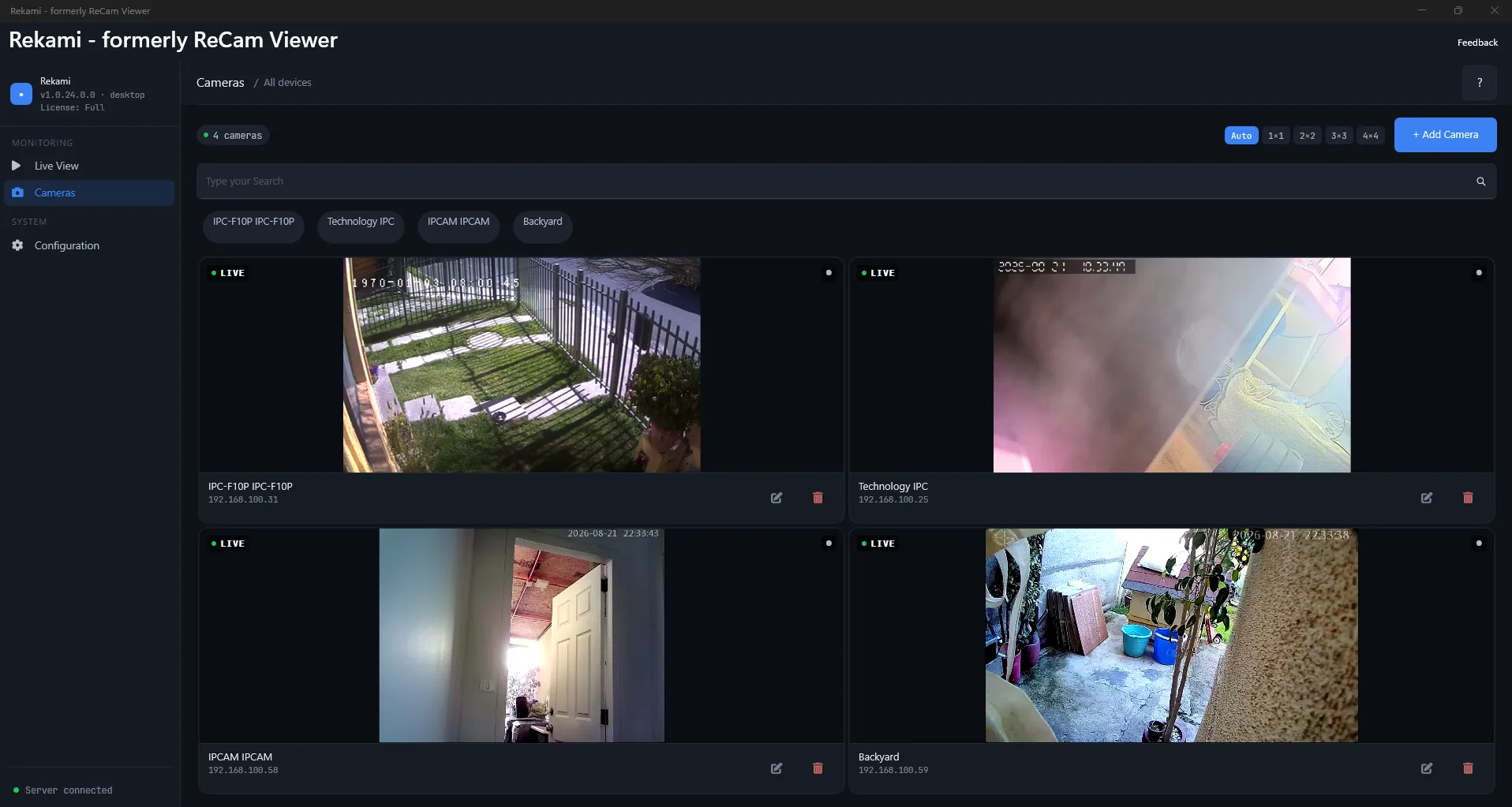
For a small setup, the multi-camera view gives you the useful part of an NVR dashboard without requiring a dedicated server.
5. Record or take a snapshot
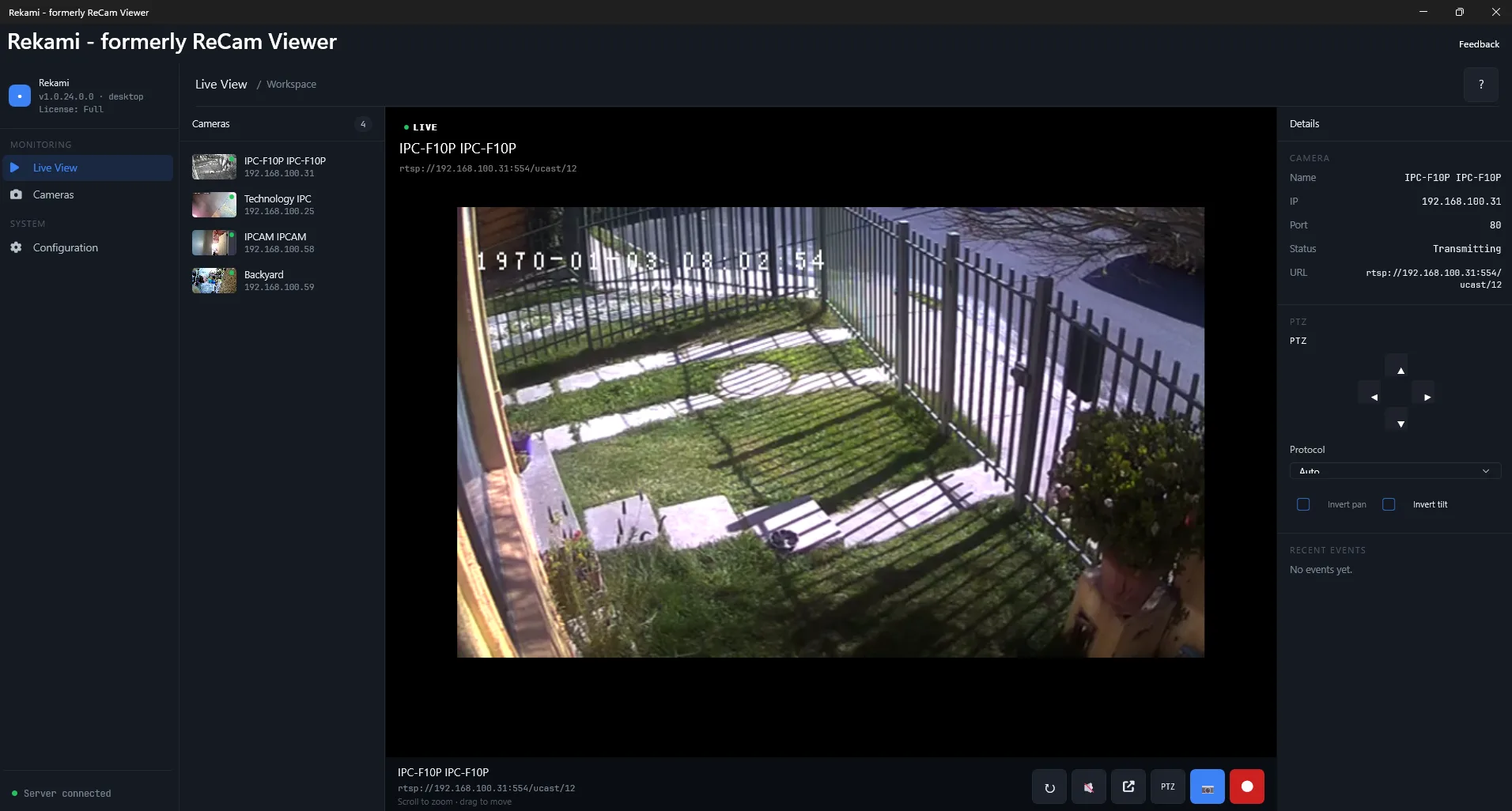
From the live view you can save a local recording or capture a still image. Rekami writes those files to the Windows location you choose; it does not upload the footage to a Rekami cloud.
Troubleshooting camera discovery and RTSP playback
The ONVIF camera does not appear
- Confirm that the PC and camera are on the same local network. A guest Wi-Fi network may isolate devices even when they use the same router.
- If your model has a web administration page, try opening it from the PC. Otherwise, check the camera address in the manufacturer’s app or router device list. A missing web page alone does not prove that the camera is unreachable.
- Check the model documentation for ONVIF support and enable it if required. A camera working in its vendor app does not necessarily expose an ONVIF service.
- If discovery still finds nothing but the model supports RTSP, use its documented stream URL through manual setup. Finding a device and playing its stream are separate steps.
The camera appears, but the preview fails
Check the local camera username and password, the RTSP path and whether RTSP is enabled. Many cameras expose separate main and sub streams; test a documented lower-resolution sub stream if available. Discovery alone does not confirm that credentials or codecs will work.
Why does it work in the manufacturer’s app but not on Windows? The vendor app may use a different connection or account. For example, TP-Link’s Tapo setup guide requires a separate camera account for third-party RTSP/ONVIF access, distinct from the Tapo account login. It also documents model-specific restrictions, including battery-powered cameras. This is manufacturer guidance, not a claim that every Tapo model has been tested with Rekami.
Do not share a real RTSP URL containing your password in a support post. Local viewing does not require forwarding camera ports to the internet.
The stream plays, then disconnects
Check Wi-Fi stability, whether the PC switched networks and whether the camera’s address changed. A DHCP reservation in the router can keep that address stable. Review local firewall permissions without disabling the firewall. If one camera works alone but several do not, test fewer simultaneous streams and lower stream quality to help isolate a network or device limit.
When an NVR is the better choice
Choose a full NVR when you need continuous scheduled retention, motion rules, automatic alerts, multiple users or a large installation. Rekami is intentionally focused on local discovery, organized viewing, snapshots and straightforward recording for a small number of cameras.